Best Yakitori and Izakaya in Seoul 2026 – Where to Go for Skewers and Highballs
Hi there, this is Ssenea. 😎
Seoul's Japanese dining scene has expanded well beyond sushi. Over the past few years, yakitori counters — charcoal grills, chicken on skewers, sake or highball on the side — have quietly become some of the most interesting places to eat in the city. A few of them are now serious enough to appear in the Michelin Guide.
This is a guide to four of the best yakitori and izakaya spots in Seoul in 2026. They range from a Michelin Bib Gourmand omakase counter to a casual izakaya that's good for groups. All are in the Mapo-gu area, which has become the de facto center of Seoul's Japanese dining neighborhood.
What Is Yakitori?
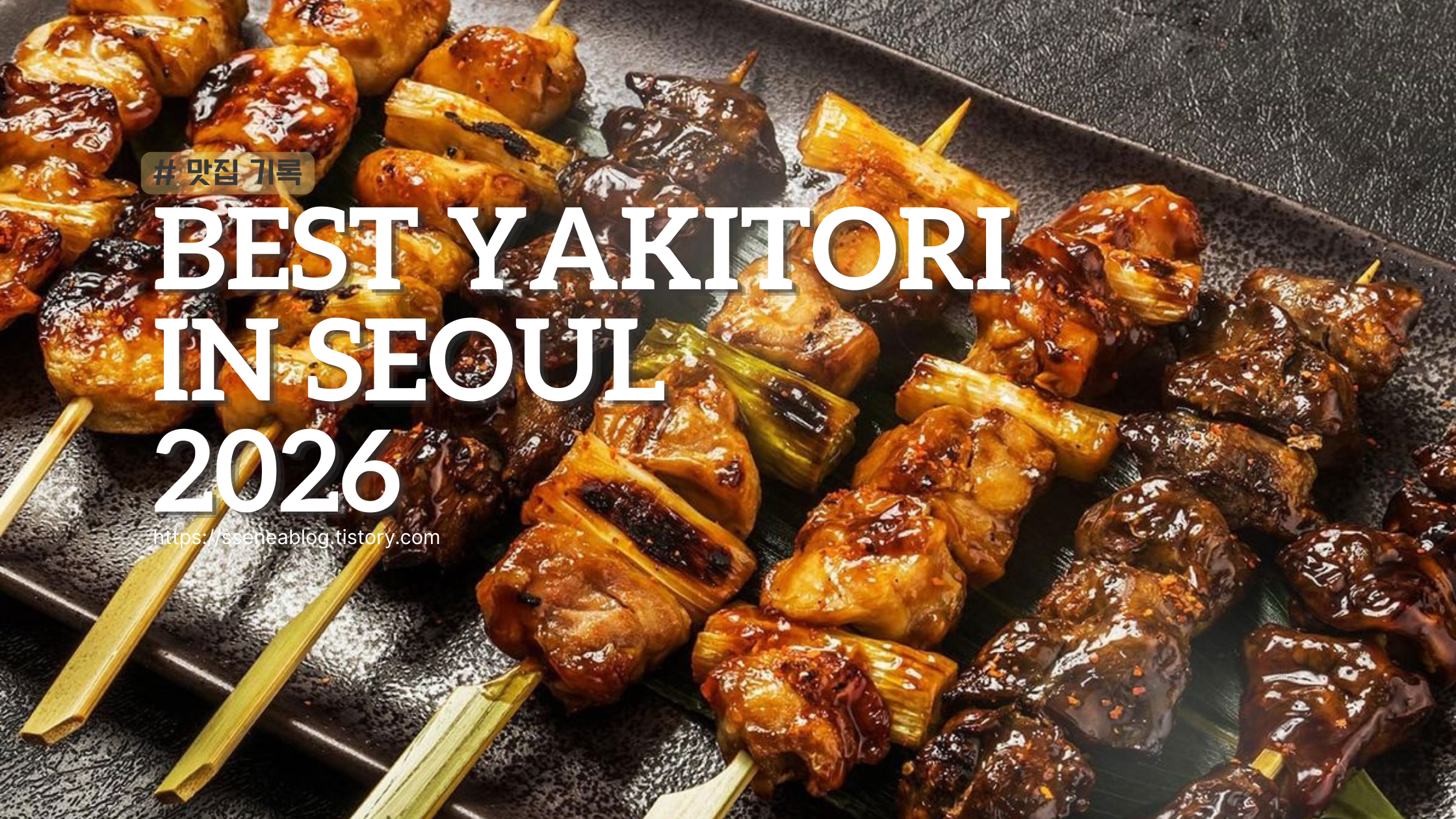
Yakitori (焼き鳥) is Japanese grilled chicken on skewers — different cuts of the bird, seasoned with either salt (shio) or tare (a sweetened soy-based sauce), cooked over high-heat charcoal. The best versions use binchotan charcoal, which burns clean and extremely hot, giving the meat a specific char that other heat sources can't replicate.
The format suits a counter. You sit close to the grill, order a few skewers at a time, and eat them as they come rather than all at once. It pairs well with sake, Japanese whisky, or a highball (ハイボール) — whisky and soda served in a tall glass over ice.
Common cuts to know:
| Japanese | Cut | Notes |
| Momo (もも) | Thigh | Rich, juicy — the standard starting point |
| Negima (ねぎ間) | Thigh + green onion | Sweet onion contrast, one of the classics |
| Tsukune (つくね) | Chicken meatball | Usually served with a dipping egg yolk |
| Kawa (皮) | Skin | Crispy and fatty, an acquired taste |
| Reba (レバー) | Liver | Rich and mineral, best just barely cooked |
| Chochin (提灯) | Unlaid egg + ovary | Rare; only available from laying hens |
The conventional advice: try the first skewer plain or with salt. The tare comes later. Eating with your hands is correct.
4 Best Yakitori Spots in Seoul
1. Yakitori Mook (야키토리 묵) — Michelin Bib Gourmand, Yeonnam
Address: 223-102 Yeonnam-dong, Mapo-gu, Seoul
Getting there: Line 2, Hongdae (Hongik Univ.) Station (홍대입구역), Exit 3 — approx. 10-min walk
Hours: Monday–Saturday 5:00 PM – 10:00 PM / Closed Sunday
Courses: ₩22,000 (anju, from 9 PM) / ₩35,000 (3.5 omakase) / ₩45,000 (4.5 omakase)
Book: Catch Table (reservations essential)
The chef behind Yakitori Mook is Kim Byeong-seok, known as "Yakitori King" after appearing on Culinary Class Wars. He trained in Japan before returning to Seoul to focus on one thing: chicken. His style values precision over presentation. Each piece of meat hits the grill at just the right moment, using various parts of Korean native chicken over binchotan charcoal that burns clean and hot.
The tsukune, served with a poached egg, is tender and juicy, making it one of the most popular items alongside the negima. The chochin — an unlaid egg skewer that can only be sourced when a laying hen is slaughtered — appears when available and is worth ordering if it's on the menu.
There are only two seatings of limited spaces each evening, and therefore reservations are essential. Catch Table is the booking platform. Seats go quickly. Alcohol orders are required — one drink per person minimum. Corkage for wine or sake is ₩30,000 per bottle; whisky is ₩50,000.
Don't miss: Tsukune with egg yolk, negima, chochin when available
Note: Michelin Bib Gourmand 2025–2026; minors not permitted
2. Yakiton Tontoro Hapjeong (야키톤 톤토로 합정) — Pork Skewers, Casual Format
Address: Near Hapjeong Station, Mapo-gu, Seoul
Getting there: Lines 2 & 6, Hapjeong Station (합정역), approx. 5-min walk
Yakiton is the pork version of yakitori — same charcoal grill, same skewer format, different animal. Tontoro is the Hapjeong branch of a well-regarded pork skewer specialist. The format is more casual than Yakitori Mook: you can walk in or make same-day reservations, the menu extends to okonomiyaki and yakisoba alongside the skewers, and the drink list includes an unusually well-stocked whisky highball selection.
For visitors who want the izakaya experience without the omakase formality — order a few skewers, a highball, some fried sides — this is the right choice. The Talisker highball in particular has developed a following.
Don't miss: Pork skewers, okonomiyaki, Talisker highball
Note: More casual than Yakitori Mook; group-friendly
3. Choya Hapjeong (초야 합정) — Sushi + Yakitori Izakaya
Address: Near Hapjeong Station, Mapo-gu, Seoul
Getting there: Lines 2 & 6, Hapjeong Station (합정역), approx. 5-min walk
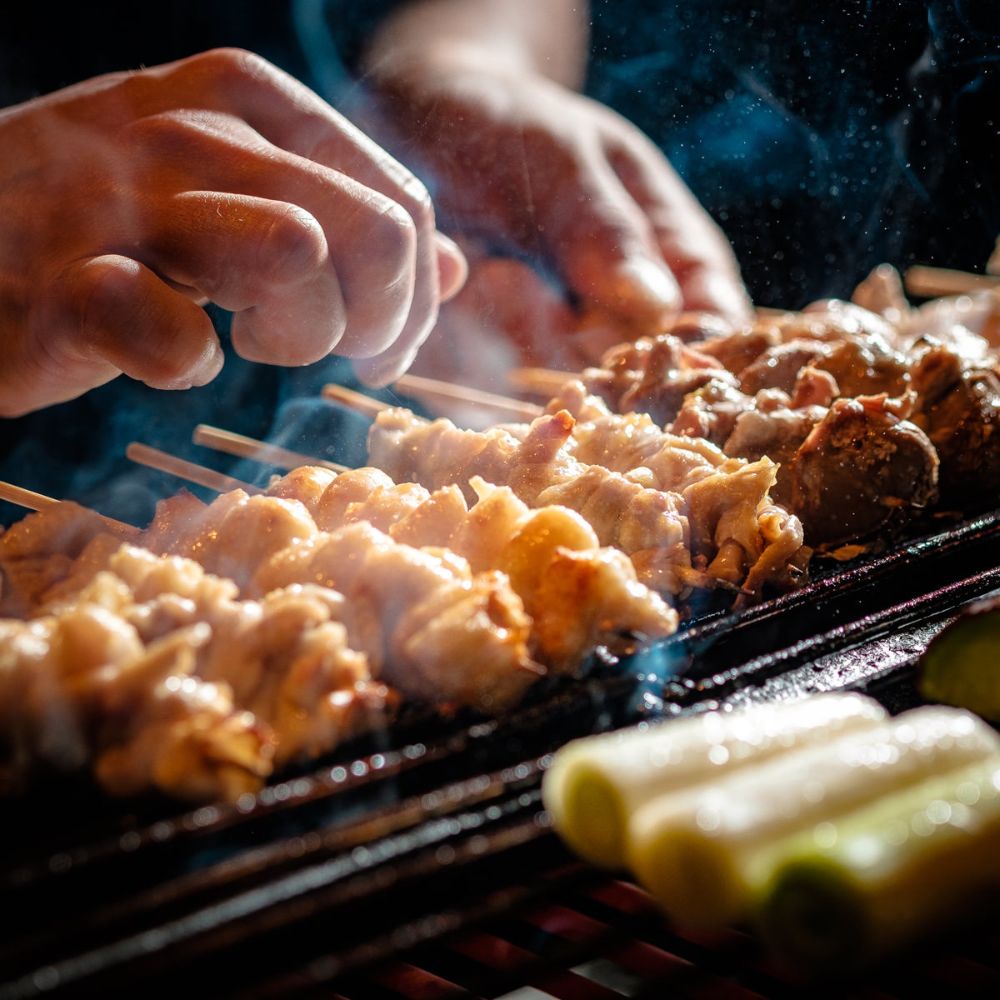
Choya is the option for people who don't want to commit to a single format. The menu combines yakitori skewers, fresh sushi, hasamiage (Japanese-style deep-fried dishes), and aemono (dressed raw fish). It reads like a full Japanese izakaya menu rather than a specialist counter.
The price point is noticeably more accessible than the omakase opti
ons on this list, and the atmosphere is relaxed enough that it works well as a second stop after dinner elsewhere. For first-time visitors to Seoul's Japanese restaurant scene who want to try a range of things without committing to a single-focus counter, Choya is a sensible starting point.
Don't miss: Yakitori skewers, sushi, hasamiage
Note: Accessible price point; good for groups or second-stop visits
4. Yakitori Kiyu Gen (야키토리 키유 겐) — Heritage Chicken Counter, Gongdeok
Address: 31 Dohwa 4-gil, Mapo-gu, Seoul (Gongdeok area)
Getting there: Lines 5 & 6, Gongdeok Station (공덕역), approx. 5-min walk
Hours: Daily 5:00 PM – 9:30 PM (2 seatings: 5–7 PM / 7:30–9:30 PM) / Closed Sunday
Note on the Kiyu situation: The original Yakitori Kiyu went on temporary hiatus from June 2026 and has since relaunched as Yakitori Kiyu Gen (@yakitori_kiyu_gen) at the same Gongdeok address. Confirm current status via Instagram or Catch Table before visiting.
Yakitori Kiyu specializes in tojongdak, a heritage chicken raised on medicinal herbs. The chefs skillfully grill each cut, filling the space with the enticing aroma of Korean-style yakitori. The restaurant uses chickens naturally raised on various medicinal herbs to provide diners with healthy, high-quality cuts. The menu features unlaid chicken eggs, which can only be obtained when a laying hen is slaughtered, highlighting the freshness of the ingredients.
The wine list is developed in collaboration with a dedicated sommelier — unusual for a yakitori counter and worth taking advantage of. Counter seating means solo visitors are completely comfortable here.
Don't miss: Heritage chicken yakitori course, chochin, wine pairing
Note: Check Instagram (@yakitori_kiyu_gen) for current booking status before visiting
Quick Comparison
| Restaurant | Format | Price Range | Atmosphere | Best For |
| Yakitori Mook | Omakase counter | ₩22,000–45,000 | Focused, serious | Dedicated yakitori experience |
| Yakiton Tontoro | Casual izakaya | ₩30,000 range | Relaxed, group-friendly | Pork skewers, highballs |
| Choya Hapjeong | Full izakaya menu | ₩25,000–35,000 range | Casual, varied | First-timers, mixed groups |
| Yakitori Kiyu Gen | Omakase counter | Course price | Intimate counter | Heritage chicken, wine |
Practical Notes for International Visitors
Reservations: Yakitori Mook and Yakitori Kiyu Gen require advance booking through Catch Table (international version available). Tontoro and Choya are more walk-in friendly but weekend evenings benefit from reservations.
Alcohol requirements: Both omakase counters require at least one drink order per person. This is standard in Seoul yakitori culture. If you don't drink alcohol, confirm whether non-alcoholic options count toward the minimum before booking.
Solo dining: Counter-format restaurants are among the best places in Seoul to eat alone. All four spots handle solo diners naturally — the counter removes the table-for-one awkwardness entirely.
Timing: Yakitori Mook runs two seatings per evening. The 5 PM seating (₩35,000 course) tends to be slightly more relaxed; the 7 PM seating (₩45,000 course) runs longer and includes premium items. The late-night anju course (₩22,000 from 9 PM) is a good entry point if you want to try the space with a lower commitment.
Why Mapo-gu for Japanese Food
The Hongdae–Hapjeong–Gongdeok corridor in Mapo-gu has developed into the most concentrated area of quality Japanese dining in Seoul. Within 15 minutes of walking, you can reach Yakitori Mook, Choya, and Tontoro; Yakitori Kiyu Gen is a short subway ride away at Gongdeok. The neighborhood's mix of independent restaurants, low rents compared to Gangnam, and proximity to Hongik University keeps the food scene younger and more experimental than Seoul's other dining districts.
Seoul's Yakitori Scene Is Worth Going Out of Your Way For
The best yakitori in Seoul in 2026 is genuinely competitive with what you'd find in a Japanese city of similar size. Yakitori Mook earned its Michelin Bib Gourmand by doing one thing with consistent precision. The more casual options in Hapjeong offer the full izakaya evening — food, drinks, atmosphere — without the booking pressure. Pick your format, reserve the counter, and bring an appetite for charcoal smoke.
Exploring more of Seoul's Japanese dining scene? Check out our guide to budget sushi omakase in Seoul — another side of the city's Japanese food culture worth knowing.
🇰🇷 Read this in Korean: 서울 야키토리 맛집 추천 2026 – 퇴근 후 꼬치 한 꼬치의 행복
서울 야키토리 맛집 추천 2026 – 퇴근 후 꼬치 한 꼬치의 행복
서울 야키토리 맛집 추천 2026 – 퇴근 후 꼬치 한 꼬치의 행복안녕하세요. Ssenea 입니다. 🥰가끔 퇴근하고 나서 딱 한 잔 하고 싶은데 삼겹살은 좀 무겁고, 그렇다고 그냥 치킨집은 아쉬운 날이
sseneablog.tistory.com
'맛집 기록' 카테고리의 다른 글
| 서울 한식 찌개 맛집 추천 2026 – 된장·순두부 성지 4곳 총정리 (0) | 2026.07.31 |
|---|---|
| 서울 떡볶이 맛집 추천 2026 – 스타일별 성지 4곳 총정리 (0) | 2026.07.30 |
| 서울 라멘 맛집 추천 2026 – 진한 국물 한 그릇이 생각날 때 (0) | 2026.07.29 |
| Best Budget Sushi Omakase in Seoul 2026 – Under ₩40,000 Per Person (0) | 2026.07.29 |
| Best Unique Dessert Cafes in Seoul 2026 – Beyond the Instagram Photo (0) | 2026.07.29 |