Korean Food Guide for First-Timers in Seoul 2026 – What to Eat and Where
Hi there, this is Ssenea. 😎
Korean food is one of the strongest reasons to visit Seoul, and one of the things that surprises visitors most when they actually get there. The international version of Korean cuisine — bibimbap, bulgogi, kimchi — is real and worth eating. But Seoul's food culture goes considerably deeper than those three dishes, and the gap between what most visitors expect and what's actually available is one of the more pleasant discoveries of any trip to the city.
This guide covers the essential Korean food experiences in Seoul for first-time visitors in 2026: the dishes to try, the ones that need context, where to eat them, and how the dining culture actually works.
How Korean Dining Culture Actually Works
Before the food, a few things that will make the experience make sense.
Banchan is the point. When you sit down at most Korean restaurants, small side dishes arrive automatically and at no extra charge. Kimchi, seasoned spinach, pickled radish, bean sprouts — the number and variety depend on the restaurant, but the practice is universal. These banchan dishes are what make a Korean meal feel more like an event than a transaction. Refills are free. Ask for more of anything you like.
You cook at the table, or you don't. Korean BBQ involves a grill built into the table, and you cook the meat yourself. Some restaurants grill for you. Either way, the format is social — it works best with at least two people and a longer time frame than a typical restaurant meal.
Rice is staple, not side. Unlike Japanese food where rice is served in an individual bowl, Korean rice is usually served in a communal or individual bowl and eaten between bites of banchan and main dishes, not as a separate course.
Soup is always present. Almost every Korean meal includes a soup or stew — sometimes as the main dish, sometimes alongside other items. The heat and fermented flavors of Korean soups are, for many visitors, the most compelling part of the cuisine.
8 Korean Dishes Worth Knowing
1. Korean BBQ (고기구이) — The Non-Negotiable
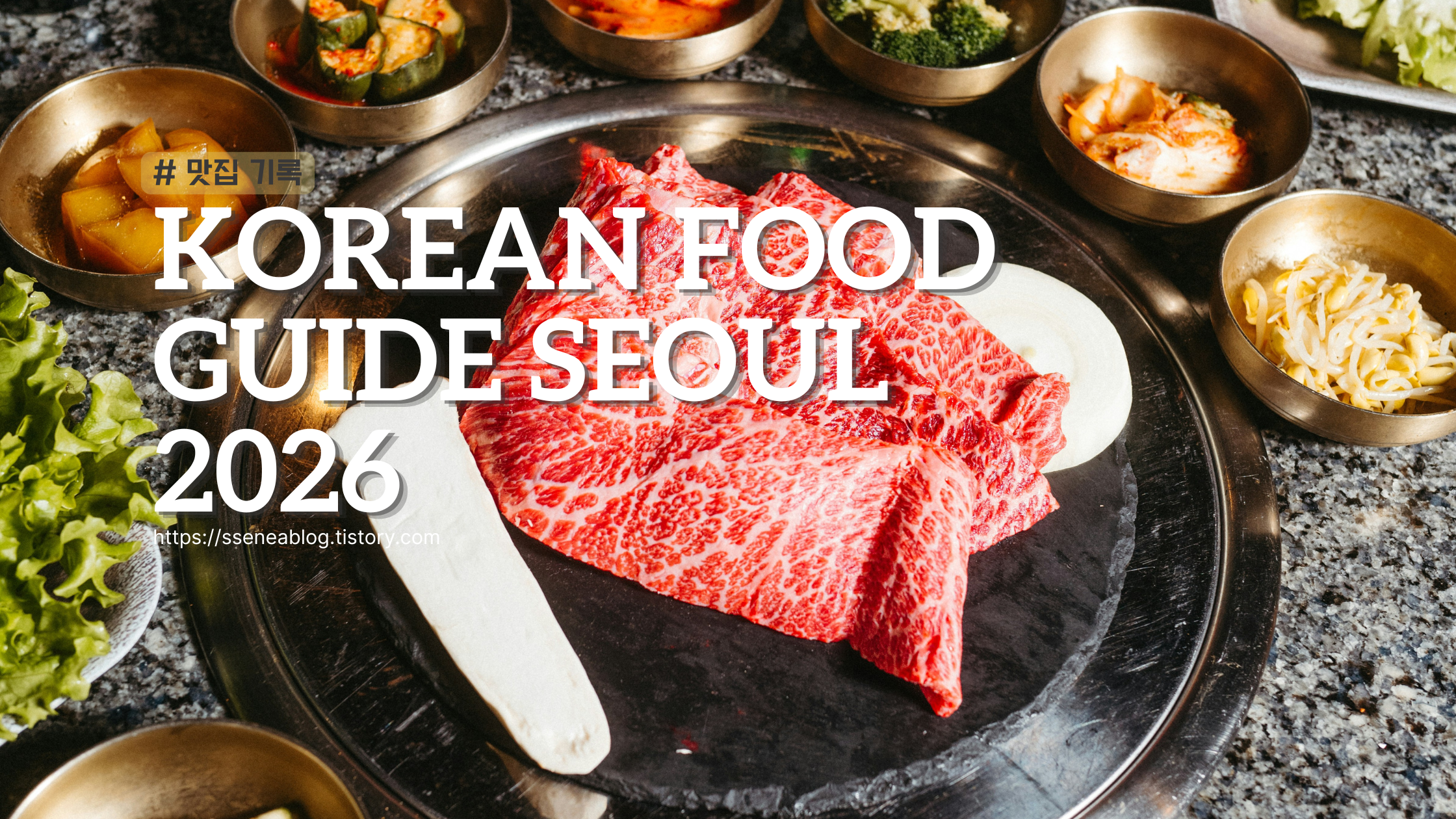
Korean BBQ is the one thing you absolutely must not miss when visiting Korea. This is the ultimate social dining experience. Meat — typically bulgogi (thinly sliced marinated beef), galbi (short ribs), or samgyeopsal (pork belly) — is grilled at the table, then wrapped in lettuce with garlic, green onion, and fermented soybean paste.
The wrapping technique is part of the meal. Ask staff to show you if it's your first time — most will happily demonstrate. The combination of textures (crisp lettuce, charred meat, pungent paste) is the reason this format has spread worldwide while still tasting better in Seoul than anywhere else.
Budget: ₩15,000–30,000 per person for a full meal
Where: Mapo-gu (Mapo Galmaegi, Yanghwa-ro area) for pork belly; Hanwoo beef BBQ in Gangnam for premium cuts
2. Bibimbap (비빔밥) — The Iconic Bowl
Rice topped with seasoned vegetables, a fried egg, and gochujang (chili paste), served in a stone bowl that keeps everything hot and creates a crispy rice crust at the bottom. If there's one non-negotiable sit-down meal for a Seoul trip, this is it.
The Jeonju version — made with stone-bowl dolsot and premium ingredients — is the most celebrated, but solid versions are available throughout Seoul. The action of mixing everything together before eating is expected and instructed.
Budget: ₩12,000–18,000
Where: Jongno-gu traditional restaurants; Insadong area for hanjeongsik sets that include bibimbap
3. Kimchi Jjigae (김치찌개) — The National Stew
A deeply fermented, spicy kimchi stew with tofu, pork, and sometimes seafood. The quality varies dramatically depending on how long the kimchi used has been fermented — well-aged kimchi produces a rounded, complex sourness that young kimchi can't replicate. This is comfort food at its most honest. Korean food is all about balance and bold, comforting flavors — kimchi jjigae is the clearest expression of that principle.
Budget: ₩9,000–13,000
Where: Any neighborhood restaurant throughout Seoul; lunch sets often include kimchi jjigae as the main
4. Doenjang Jjigae (된장찌개) — The Fermented Soybean Stew
The milder cousin of kimchi jjigae. Doenjang (fermented soybean paste) gives the broth a deep, earthy, slightly funky flavor that's closer to Japanese miso soup but considerably more robust. Often served with tofu, zucchini, mushrooms, and potato. For visitors who find kimchi jjigae too spicy, doenjang jjigae is the more approachable entry point into Korean stews.
Budget: ₩9,000–13,000
Where: Traditional restaurants throughout the city; strongest versions in older neighborhoods like Jongno and Insadong
5. Naengmyeon (냉면) — Cold Noodles in Icy Broth
Cold buckwheat or sweet potato noodles in an icy beef broth, topped with pickled radish, cucumber, sliced pear, and a hard-boiled egg. Counterintuitive but deeply refreshing in hot weather. Pyongyang naengmyeon is the most famous variety.
This dish is a summer staple, and the cold temperature is intentional. The broth is light but deeply flavored — add the vinegar and mustard provided at the table to adjust seasoning. Eulji Myeonok in Jung-gu is one of Seoul's most respected naengmyeon restaurants.
Budget: ₩12,000–16,000
Where: Eulji Myeonok (Jung-gu); Woo Lae Oak (Jongno, operating since 1945)

6. Samgyetang (삼계탕) — Ginseng Chicken Soup
A whole young chicken stuffed with glutinous rice, ginseng, garlic, and jujubes, simmered in a clear broth until the meat falls off the bone. Served in the vessel it was cooked in, arriving at the table still bubbling. The broth is clean and deeply savory; the chicken tears apart with chopsticks.
Paradoxically popular in summer — the Korean belief in fighting heat with heat (복날 culture) means the hottest days of July and August are when queues for samgyetang are longest.
Budget: ₩16,000–22,000
Where: Tosokchon Samgyetang (Chebu-dong, Jongno — one of Seoul's most famous versions, operating for decades)
7. Hanjeongsik (한정식) — The Full Korean Spread
A multi-course set meal of traditional Korean dishes: soup, rice, multiple stews, grilled fish, seasonal vegetables, and dozens of banchan arranged across the table simultaneously. It's the format that best represents the range of Korean cuisine in a single sitting. The neighbourhood surrounding Insadong has excellent traditional Korean set-meal restaurants serving multi-course spreads of seasonal Korean food at more accessible prices than central Seoul fine dining. Budget ₩15,000–30,000 per person for a full hanjeongsik lunch.
Budget: ₩15,000–30,000 (lunch); ₩50,000+ for premium versions
Where: Insadong-gil and adjacent streets in Jongno-gu
8. Korean Fried Chicken (치킨) — The Modern Classic
Not traditional, but now inseparable from Seoul's food identity. Double-fried for maximum crispness, then sauced in either soy-garlic or spicy yangnyeom sauce. Best eaten with a cold beer — the chimaek (chicken + beer) combination is a Seoul evening ritual at its most unpretentious.
The best fried chicken in Seoul tends to be found in neighborhood spots rather than franchise chains — the chicken is crispy, tender, and not greasy.
Budget: ₩18,000–25,000 for a half chicken
Where: Delivery to any address via Baemin or Coupang Eats; neighborhood chimaek spots in Hongdae and Mapo
Where to Eat: Neighbourhoods by Food Culture
| Neighbourhood | Best For |
| Jongno / Insadong | Traditional hanjeongsik, naengmyeon, historic restaurants |
| Mapo / Hongdae | Korean BBQ (pork belly), chimaek, casual dining |
| Gangnam | Premium hanwoo BBQ, Michelin-starred Korean |
| Euljiro (Hipjiro) | Modern Korean, natural wine, craft cocktail pairings |
| Gwangjang Market | Bindaetteok, yukhoe, mayak gimbap, makgeolli |
Practical Notes for First-Time Visitors
Ordering without Korean: Most restaurants in tourist areas have picture menus or English translations. In neighborhood restaurants without English, pointing at what nearby diners are eating works reliably. Google Translate's camera function handles Korean menus well.
Meal timing: Korean restaurants tend to be open for clearly defined lunch (11:30 AM–2:00 PM) and dinner (5:30–9:00 PM) windows. Arriving outside these hours at smaller restaurants may mean limited options or temporary closure.
Spice levels: Korean food uses gochugaru (red pepper flakes) and gochujang (fermented chili paste) extensively. "Not spicy" (안 매운 거 있어요?) works at most restaurants, though completely spice-free Korean food is limited. Doenjang-based dishes and naengmyeon are the most reliably mild options.
Payment: Most restaurants accept cards. Smaller market stalls and pojangmacha (tent pubs) are cash-only. Carry small bills.
Water and tea: Free, self-serve, and usually located at a station near the entrance. Help yourself.
Quick Reference: Korean Food Vocabulary
| Korean | Romanization | Meaning |
| 밥 | Bap | Rice |
| 국 / 찌개 | Guk / Jjigae | Soup / Stew |
| 반찬 | Banchan | Side dishes |
| 고기 | Gogi | Meat |
| 매워요 | Mawoyo | It's spicy |
| 안 맵게 | An maepge | Not spicy |
| 맛있어요 | Masisseoyo | It's delicious |
| 얼마예요? | Eolmayeyo? | How much is it? |
Seoul's Food Scene Rewards Going Deeper
The version of Korean food most visitors expect — bibimbap in a stone bowl, beef grilled at the table — is worth eating, and Seoul does both extremely well. But the more interesting discovery is usually something smaller: a neighborhood doenjang jjigae place where every table has the same stew and a stack of banchan, or a naengmyeon bowl on a hot July afternoon that makes perfect sense in context. Korean food quickly becomes one of the favorite cuisines for visitors who try it with an open mind — Seoul is a true foodie city, and the experience of eating here is one of the strongest arguments for coming back.
Exploring more of Seoul's food scene? Check out our Korean street food guide for market stalls and pojangmacha, and our guides to budget sushi omakase and yakitori for Seoul's Japanese dining scene.
🇰🇷 Read this in Korean: 서울 한식 찌개 맛집 추천 2026 – 된장·순두부 성지 4곳 총정리
서울 한식 찌개 맛집 추천 2026 – 된장·순두부 성지 4곳 총정리
서울 한식 찌개 맛집 추천 2026 – 된장·순두부 성지 4곳 총정리안녕하세요. Ssenea 입니다. 🥰어느 피곤한 날, 자극적인 음식이 아닌 뜨끈한 뚝배기 찌개 한 그릇이 당기는 날이 가끔 있어요. 부글
sseneablog.tistory.com
'맛집 기록' 카테고리의 다른 글
| 서울 파스타 맛집 추천 2026 – 데이트하기 좋은 이탈리안 레스토랑 4곳 (0) | 2026.08.06 |
|---|---|
| 서울 한식 백반 맛집 추천 2026 – 집밥 같은 한 끼 4곳 (0) | 2026.08.05 |
| 서울 스페셜티 커피 맛집 추천 2026 – 원두 맛이 다른 카페 4곳 (1) | 2026.08.04 |
| 서울 한식 찌개 맛집 추천 2026 – 된장·순두부 성지 4곳 총정리 (0) | 2026.07.31 |
| 서울 떡볶이 맛집 추천 2026 – 스타일별 성지 4곳 총정리 (0) | 2026.07.30 |