Jeonju Travel Guide 2026 – Korea's Food Capital and Hanok Village
Hi there, this is Ssenea. 😎
Seoul is where most international visitors to Korea start. Jeonju is where some of them end up staying longer than planned.
Located in North Jeolla Province, about 230 kilometers south of Seoul, Jeonju is a mid-sized city that contains one of Korea's best-preserved traditional neighborhoods, the country's most serious food culture, and a pace of life that feels genuinely different from anywhere in the capital. No Korean city takes its food more seriously than Jeonju. Its UNESCO Creative City of Gastronomy designation is hard-won: the local rice is among the country's finest, the banchan spread at any good restaurant runs to 15–20 dishes, and several of Korea's most beloved dishes were either invented here or perfected here over centuries.
This guide covers how to get to Jeonju, what to see and do, what to eat, and how to make the most of your time in Jeonju in 2026.
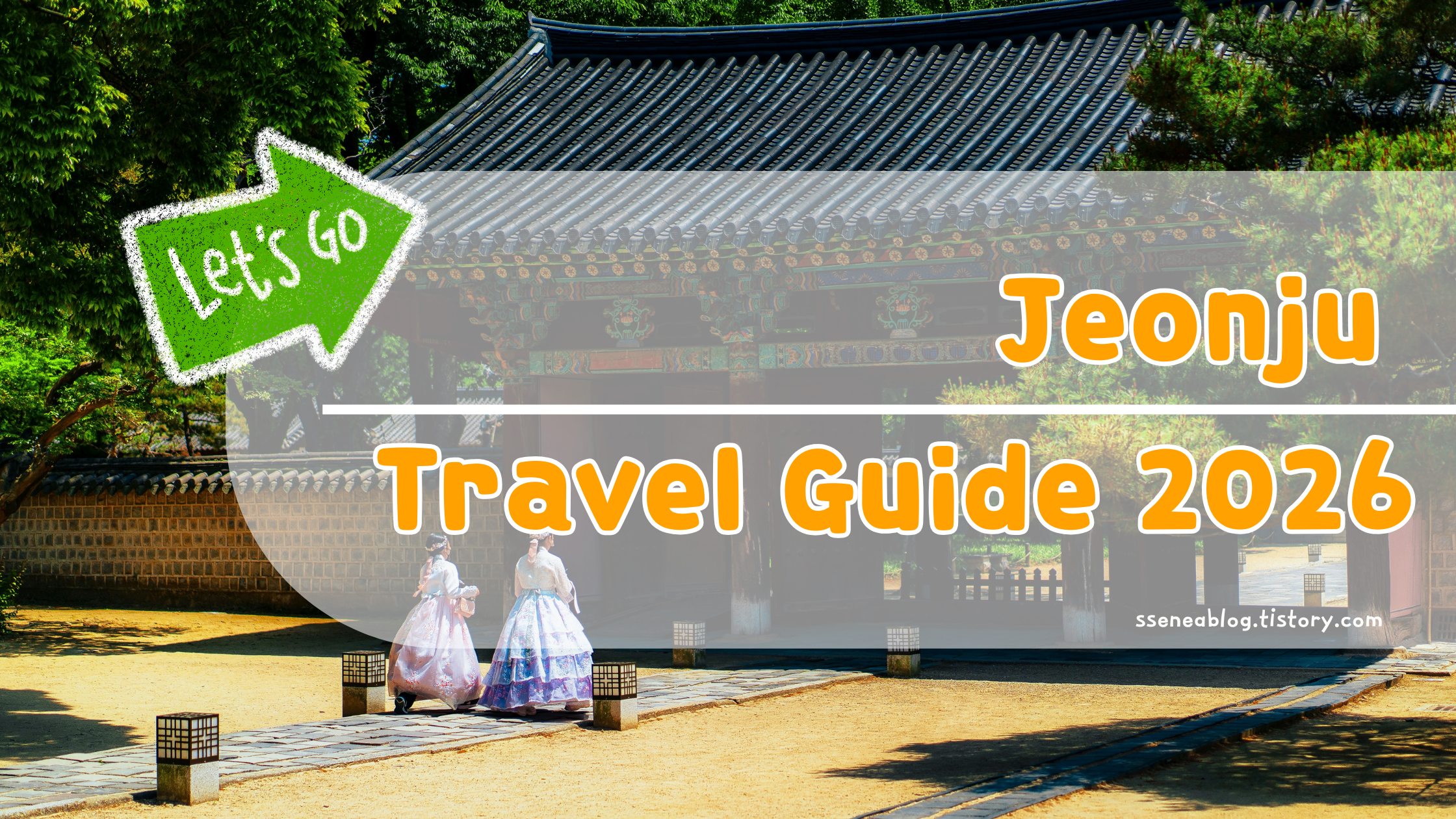
Getting to Jeonju from Seoul
KTX — Fast and Comfortable
The fastest way from Seoul to Jeonju is the KTX high-speed train, which cuts the travel time roughly in half compared to the bus.
| Departure | Arrival | Duration | Price |
| Seoul Station / Yongsan | Jeonju Station | ~1h 30min | ₩25,000–35,000 |
Book through Korail (korail.com) — the English interface works well. Jeonju Station is about 3 kilometers from the Hanok Village; taxis are plentiful and cost around ₩5,000–7,000.
Express Bus — More Frequent Departures
The express bus from Seoul Central Bus Terminal (강남터미널) to Jeonju takes about 2 hours 30–40 minutes and runs frequently throughout the day. Tickets cost ₩15,000–20,000 and can be booked on kobus.co.kr. The Jeonju bus terminal is closer to the Hanok Village than the train station — a short taxi ride or 20-minute walk.
Day trip vs overnight: Jeonju works as a day trip from Seoul, but the city earns more from a single overnight stay. The Hanok Village empties after dinner, and the early morning — before the street food stalls open and day-trippers arrive — is when it's most atmospheric. If you have the flexibility, one night in a hanok guesthouse changes the experience significantly.
What to See — The Essentials
1. Jeonju Hanok Village (전주한옥마을)
As of 2026, Jeonju Hanok Village stands as one of South Korea's most enchanting destinations. This expansive neighborhood features over 800 traditional hanok houses, creating a living museum of Joseon Dynasty architecture that feels worlds away from modern Seoul.
The quietest, most atmospheric hours are before 9 AM and after 8 PM, when day-trip crowds have thinned. On weekends in spring and autumn, the main alleys become genuinely crowded by mid-morning. If you're visiting on a weekend, an early start is the practical decision, not just the aesthetic one.
The village is entirely walkable. The main routes take about 90 minutes at a relaxed pace — longer if you stop for food, hanbok photos, or workshops. There's no single entrance; the village bleeds into the surrounding neighborhood without formal gates.
Free to enter. Commercial activity (food, shops, hanbok rental, workshops) operates throughout.
2. Gyeonggijeon Shrine (경기전)
Gyeonggijeon Shrine serves as the cultural heart of Jeonju Hanok Village, housing the portrait of King Taejo, the founder of the Joseon Dynasty. This historic site, surrounded by manicured gardens and ancient gates, exudes a serene atmosphere with the scent of incense and the soft rustling of bamboo.
The shrine is set slightly apart from the busiest commercial streets, which makes it feel genuinely quiet even when the surrounding village is busy. The bamboo grove behind the main building is one of the better places in Jeonju to stop, take a breath, and absorb the surroundings.
Admission: ₩3,000 for adults
Time needed: 30–45 minutes
3. Jeondong Catholic Cathedral (전동성당)
Built in 1914 as a memorial to Korean martyrs, Jeondong Catholic Cathedral is a striking Gothic landmark whose red brick facade contrasts beautifully with the surrounding tiled hanok roofs. Standing at the edge of the Hanok Village, the Gothic spires next to tiled hanok rooftops create one of Jeonju's most visually specific scenes — two entirely different architectural languages from the same period, side by side.
Built partly on the site of the city's Joseon-era west gate, the cathedral's history as a memorial to Catholics executed during the late Joseon period adds context to what might otherwise look like a simple architectural curiosity.
Admission: Free
Best time: Late afternoon, when the setting sun hits the brick facade
4. Hanbok Rental
Hanbok rental shops are everywhere in the Hanok Village — you cannot walk 50 meters without passing one. Prices range from ₩10,000–20,000 for a few hours. Most shops include hair styling. The combination of hanbok and hanok rooftops produces photographs that are hard to replicate elsewhere in Korea, which explains why this has become a standard activity even for people who would not normally consider wearing traditional dress.
Practical note: Rental shops open around 9–10 AM. If you want photographs in the village before the crowds arrive, arrange a very early rental or return to the photography spots in the evening.
5. Nambu Market (남부시장)
A 10-minute walk south of the Hanok Village, Nambu Market is the city's main traditional market — wet produce, dried goods, and a long line of tteok (rice cake) vendors on the ground floor. The top floor has been transformed by young local food entrepreneurs into a pojangmacha-style food court with more creative, contemporary dishes.
Visit on a Friday evening when it operates as a weekly night market. The Friday night market is worth planning around if your schedule allows — genuinely local, not performatively touristy, and one of the better versions of this format in Korea.
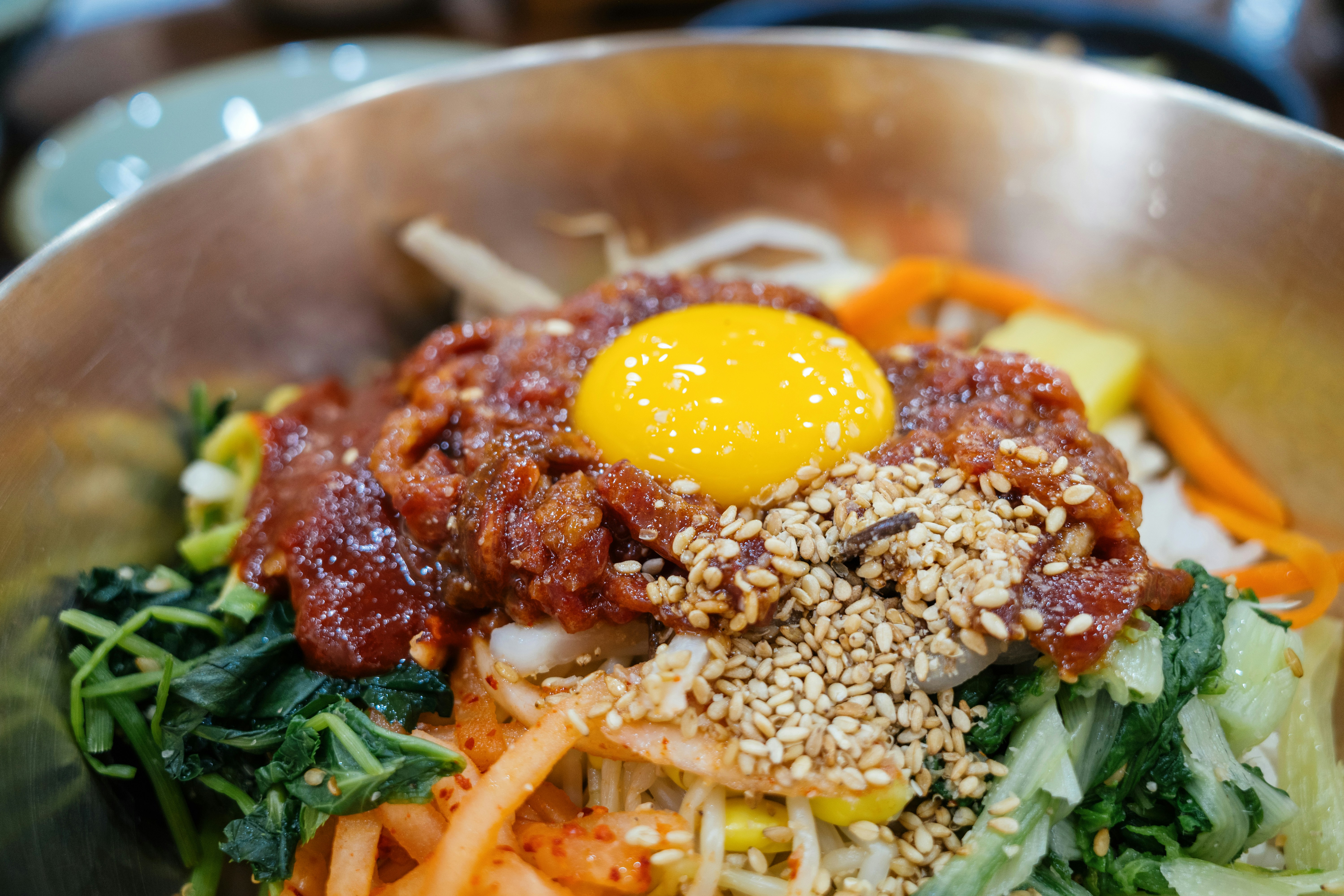
What to Eat in Jeonju
Jeonju Bibimbap — The Dish That Started Here
The dish Jeonju is famous for is also the one most visitors eat first — and it bears almost no resemblance to the convenience-store version you may have encountered elsewhere. Jeonju bibimbap arrives in a large bronze bowl (not a hot stone pot), the rice is cooked in rich yuksu beef bone broth rather than plain water, and the toppings are prepared individually with care. The banchan (side dishes) that accompany the meal typically number 15–20 items.
Where to eat it: The bibimbap restaurants along the main Hanok Village food alley are reliable. Look for places with the longest queues and the shortest menus. Budget ₩12,000–18,000 for a full set.
Kongnamul Gukbap (콩나물 국밥) — Jeonju's Other Essential
Less internationally famous than bibimbap but equally important to Jeonju's food identity, kongnamul gukbap is a clear broth soup with bean sprouts, rice, and a raw egg stirred in at the table. It's a breakfast and late-night food of long standing, served 24 hours at the best shops.
Order it with kimchi on the side. The heat of the soup cooks the egg as you eat, and the clean, simple flavors after a night in the Hanok Village work in a way that's difficult to describe without experiencing.
Where to find it: Early morning near the market area; many shops open from 6 AM.
Moju (모주) — Jeonju's Unique Non-Alcoholic Herbal Drink
Moju is one of the most Jeonju-specific things you can drink, and it's almost completely unknown outside the city. It begins as makgeolli (traditional rice wine), but is then boiled down with a blend of medicinal herbs — ginger, cinnamon, jujube, and licorice root among them — until the alcohol burns off and the liquid thickens into a warm, amber-colored drink that tastes somewhere between a sweet herbal tea and a spiced rice dessert.
The result is entirely alcohol-free, warming, and unmistakably aromatic. Vendors in the Hanok Village serve it hot in small cups for around ₩1,000–2,000, usually from pojangmacha-style stalls alongside bindaetteok (mung bean pancake) and other market snacks. The combination — a small cup of moju with a hot pancake fresh off the griddle — is the most Jeonju thing you can eat or drink in a single sitting.
Moju is not available in Seoul in any meaningful form. It is so tied to Jeonju's culinary identity that drinking it here feels less like trying a beverage and more like understanding something specific about where you are. Don't leave Jeonju without having at least one cup.
Jeonju Chocolate Pie and Street Food
The Jeonju version of the chocolate pie — a soft chocolate cake with cream inside — is a regional specialty that has developed its own identity separate from the mass-market version. Street food stalls sell them freshly made throughout the Hanok Village, and they work well as a snack between meals.
Other street food worth trying: maesil (plum) tea, bindaetteok (mung bean pancake), and the various rice cake and sweet snack vendors throughout the village alleyways.
Practical Information
When to visit: Spring (April–May) for mild weather and the Jeonju International Film Festival; autumn (October) for the Korea Jeonju Bibimbap Festival and clear, cool skies. Summer is hot and humid but manageable; winter is cold but the Hanok Village is beautiful in light snow.
How long to stay: One full day covers the essentials. One overnight stay covers them properly and adds the morning market, the Friday night market, and the atmospheric early-morning village before crowds arrive.
Getting around: The Hanok Village itself is walkable. For Nambu Market and other city sights, taxis are cheap (₩3,000–6,000 per short trip) and Kakao T works well in Jeonju.
English: Improving. The Hanok Village has English signage at most key sites. Restaurant menus are increasingly bilingual. The tourist information center near the village entrance has English-speaking staff.
Hanok guesthouse booking: Look for recent reviews on Naver or Airbnb's Jeonju hanok listings for verified options. Prioritise places with private bathroom facilities — some smaller guesthouses share washing facilities across rooms.
Suggested Day Itinerary
| Time | Stop |
| 8:00 AM | Arrive Jeonju from Seoul by KTX |
| 8:30–9:30 AM | Gyeonggijeon Shrine (before crowds) + bamboo grove |
| 9:30–10:30 AM | Hanok Village walk — alleys and architecture |
| 10:30 AM–12:00 PM | Hanbok rental + photo time |
| 12:00–1:30 PM | Jeonju bibimbap lunch |
| 1:30–2:30 PM | Jeondong Cathedral + village browsing |
| 2:30–3:30 PM | Moju + bindaetteok at a village stall |
| 3:30–5:00 PM | Chocolate pie, snacks, browsing craft shops |
| 5:30–7:00 PM | Nambu Market food floor (or Friday night market) |
| 7:30 PM | KTX or bus back to Seoul |
Jeonju Is Worth More Than a Detour
Most travelers to Korea fit Jeonju into a single day between Seoul and Busan, treating it as a quick cultural check-box. The ones who stay overnight or slow down long enough to eat a proper breakfast at the market, drink a cup of moju from a pojangmacha stall, and wander the village before 9 AM are the ones who come back. The food alone justifies the trip. The food plus the setting makes it one of the better travel decisions you can make in Korea.
Exploring more of Korea's culinary regions? Check out our guides to Gyeongju and Busan for more destinations worth the train ride south.
🇰🇷 Read this in Korean: 전주 한옥마을 당일치기 2026
전주 한옥마을 당일치기 코스 2026 – 먹거리부터 관광까지 완벽 가이드
전주 한옥마을 당일치기 코스 2026 – 먹거리부터 관광까지 완벽 가이드안녕하세요. Ssenea 입니다. 🥰국내 여행은 제주도나 해외가 아니어도 충분히 특별한 여행이 될 수 있는 곳이 많은데요. 전
sseneablog.tistory.com
'어디 가볼까' 카테고리의 다른 글
| 인천 개항장 여행 코스 2026 – 차이나타운·근대건축·월미도 당일치기 완벽 가이드 (0) | 2026.08.12 |
|---|---|
| 통영 여행 코스 2026 – 케이블카·동피랑·루지·해산물 당일치기 완벽 가이드 (0) | 2026.08.12 |
| 양양 당일치기 코스 2026 – 서핑 성지와 낙산사, 동해 바다 하루 완전 정복 (0) | 2026.08.11 |
| Things to Do in Seoul in Summer 2026 – Heat, Festivals, and How to Do It Right (0) | 2026.08.11 |
| 속초 당일치기 코스 2026 – 닭강정·설악산·아바이마을 완벽 가이드 (1) | 2026.08.11 |