Busan Travel Guide 2026 – Best Things to Do, Eat, and See in Korea's Second City
Hi there, this is Ssenea. 😎
Most visitors to Korea spend their entire trip in Seoul. That's understandable — Seoul is one of the great cities on earth and a week there barely scratches the surface. But Busan makes a compelling case for the two or three days it takes to get there and back, because it offers something Seoul genuinely cannot: a coastal city that feels like a different country.
Busan drew over 3 million international visitors in 2025 for the first time in recorded history, a 23% jump in year-on-year arrivals. The reasons are straightforward once you arrive. Mountains behind the city, sea in front of it, a fish market the size of a city block that has been running since 1945, hillside neighborhoods painted in every color, temples built into ocean cliffs, and beaches that Koreans treat as seriously as any in Southeast Asia.
This guide covers how to get to Busan from Seoul, which neighborhoods to base yourself in, the essential things to do and eat, and practical information for a first visit in 2026.

Getting to Busan from Seoul
The KTX bullet train is the standard choice, and for good reason. Seoul Station to Busan Station takes approximately 2 hours 30 minutes and runs frequently throughout the day. Tickets cost around ₩59,800 one way in standard class. Book through Korail's website (letskorail.com) or at any major station — advance booking is strongly recommended on weekends and public holidays, when trains fill completely.
The SRT train from Suseo Station (서울 수서역) is slightly cheaper and slightly faster on some routes. If you're coming from southern Seoul, this can save meaningful time.
Flying exists but rarely makes sense for domestic travel — by the time you account for airport transit and check-in, the KTX total journey time is competitive, and you arrive in central Busan rather than at an airport requiring further transit.
| Transport | Duration | Cost (one way) | Best For |
| KTX (Seoul Station) | ~2h 30min | ~₩59,800 | Most travelers |
| SRT (Suseo Station) | ~2h 15min | ~₩52,600 | South Seoul residents |
| Express bus | ~4h 30min | ~₩23,000 | Budget travelers |
| Plane | ~1h flight + transit | ~₩60,000+ | Not recommended |
Getting Around Busan
Busan's subway system has four lines and connects most tourist areas efficiently. A single journey costs ₩1,500–1,800 with a T-money card — the same card used in Seoul, so there's no need to get a new one. The key lines for tourists are Line 1 (red, running through Nampo, Seomyeon, and toward the north) and Line 2 (green, connecting Seomyeon with Haeundae and Centum City).
Taxis are metered, affordable by international standards, and easy to flag down or book via KakaoTaxi. For beach-to-beach trips — Haeundae to Gwangalli, for example — taxis are often more practical than working out the subway routing.
Neighborhoods — Where to Base Yourself
Choosing the right base matters in Busan more than in many other cities, because the attractions are not all in one compact center. Haeundae offers beach access, hotels, modern cafes, and easy coastal sights. Seomyeon is the central transport hub with shopping, nightlife, and local restaurants. Nampo has traditional markets, port atmosphere, cultural spots, and shopping streets. Gwangan offers beach views, bridge skyline, and relaxed evenings.
First-time visitors: Haeundae or Seomyeon. Both are well-connected by subway and give easy access to the city's main areas.
Travelers wanting local atmosphere: Nampo-dong. This is where older Busan lives — the fish market, BIFF Square, and the port are all walkable.
Travelers prioritizing cafes and views: Gwangalli. The beach here is smaller than Haeundae but the views of Gwangan Bridge are better, and the neighborhood has a more relaxed, less tourist-facing character.
What to Do — Essential Busan
Haeundae Beach and the Blue Line Park Sky Capsule
Haeundae is Busan's most famous beach — a long stretch of sand backed by high-rise hotels that fills completely on summer weekends. The beach itself is free and well-serviced. During July and August the water is warm enough to swim; outside these months the beach is still worth walking even if you don't get in.
The Sky Capsule runs a narrow track along the clifftops above Cheongsapo Beach, north of Haeundae. These are glass-sided pods that move slowly along the cliff edge with the sea below — the views are genuinely impressive and the ride takes about 35 minutes. Book tickets in advance at the Blue Line Park website; same-day availability during peak season is limited.
The Sky Capsule connects to the Cheongsapo area, which has a small traditional fishing village atmosphere and is significantly less crowded than Haeundae proper.
Gamcheon Culture Village (감천문화마을)
Gamcheon is a colorful village set on a hillside in Busan. Go earlier in the day, around 10 AM, to avoid the bigger crowds.
During the Korean War, Busan became a refuge for hundreds of thousands of displaced people who gave the city its resilient spirit. Gamcheon is where many of those refugees built homes — pastel-painted houses stacked up a steep hillside with narrow alleyways between them, originally a matter of necessity, now one of the most photographed places in Korea.
The village has been developed as an arts district with murals, small galleries, and cafes built into the hillside architecture. It is genuinely photogenic and worth two to three hours. Buy the stamp map at the entrance (₩2,000) and collect stamps at each landmark — this is how most visitors navigate the maze without getting completely lost.
Practical: Subway Line 1 to Toseong Station (토성역), then bus or taxi uphill. Entry is free; the stamp map is optional but useful.
Haedong Yonggungsa Temple (해동 용궁사)
Instead of sitting quietly among forested peaks, this temple stands on Busan's rocky coastline, facing the sea with waves crashing below the stone paths.
Most Korean Buddhist temples are in mountains. Haedong Yonggungsa is built directly on the ocean — on a rocky outcrop with waves breaking around the foundations. The approach involves walking down a long staircase along the cliff face, with statues and shrines cut into the rock. The temple is active and genuinely used for worship, not just tourism.
At dawn, this is one of the most atmospheric places in Korea. The combination of sea mist, chanting, incense, and crashing waves is something that's difficult to replicate anywhere else. Arrive early if you want the dawn experience — by 9 AM, tour buses arrive in volume.
Practical: Bus from Haeundae area (no direct subway). Entry is free. Taxis from Haeundae cost around ₩10,000–15,000.
Igidae Park (이기대 공원) — Busan's Best Coastal Walking Trail
While most visitors head straight to Haeundae or Gwangalli, Igidae Park offers something those beaches can't: a 4.7km coastal trail carved along dramatic sea cliffs with views across the bay to Gwangan Bridge and the Haeundae skyline.
The trail runs along the southeastern edge of Busan, where the cliffs drop directly into the East Sea. The path is well-maintained with wooden boardwalks in steeper sections, and the combination of rocky coastline, clear water, and bridge views makes it one of the most scenic walks in any Korean city. Unlike Gamcheon or Haeundae, Igidae stays genuinely uncrowded even on weekends — most visitors don't know it exists.
The full trail takes about 2 hours at a relaxed pace. Key stops include the Oryukdo Skywalk (오륙도 스카이워크) at the eastern end — a glass-floored platform extending over the cliffs with unobstructed ocean views — and the Oryukdo Islands viewpoint, where you can see the small island chain that marks the official boundary between the East Sea and the Korea Strait.
Trail tip: Walk east to west (Oryukdo → Igidae entrance near Gwangalli) so you finish near the Gwangalli beach area for dinner or a sunset drink.
Practical: Subway Line 2 to Gyeongsung University/Pukyong University Station (경성대·부경대역), then taxi to the trail entrance (approximately ₩8,000–12,000). Bus 24 or 131 from Nampo-dong also reaches the Oryukdo end. No entry fee. Open year-round.
Gwangalli Beach and Gwangan Bridge
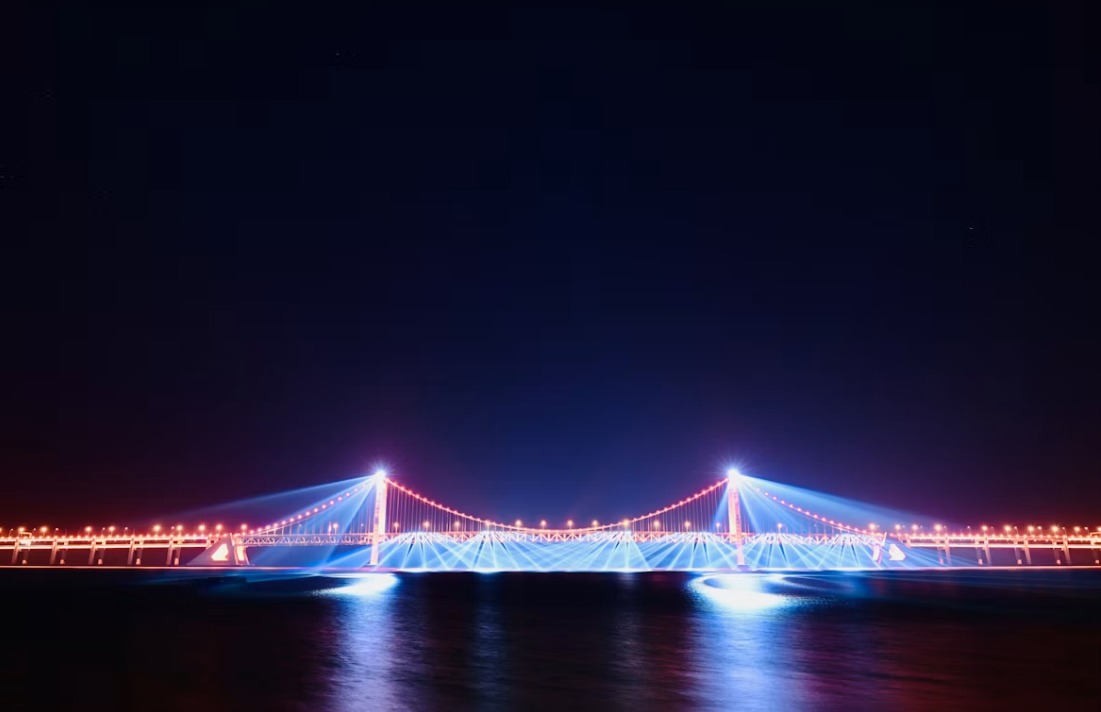
Gwangalli is a smaller, quieter beach than Haeundae with significantly better views — Gwangan Bridge, a twin-suspension bridge stretching across the bay, sits directly in front of it. At night, the bridge is illuminated and the cafes and bars along the promenade fill with people watching it.
On Saturday evenings in 2026, a drone light show runs above Gwangalli Bay. Check the official Busan tourism website for the current schedule and confirm dates before visiting — timing and frequency can change seasonally.
The neighborhood behind the beach is worth exploring: local restaurants, independent cafes, and considerably fewer tour groups than Haeundae.
What to Eat — Busan Food Guide
Busan's essential foods are eomuk (fish cake), dwaeji gukbap (pork bone soup), milmyeon (wheat noodles), ssiat hotteok (seed-filled sweet pancake), and fresh seafood. Two of those are worth going to specific addresses for.
Dwaeji Gukbap (돼지국밥) — Milyang Jip, Busan's Pork Bone Soup Done Right
A milky broth made from pork bones simmered for hours, served with rice, sliced pork, green onion, and kimchi. This is Busan's defining dish — the one food that every Korean from outside Busan specifically comes to eat when they visit.
Milyang Jip (밀양집) in the Seomyeon area is one of the most consistently recommended spots among locals and returning visitors. The broth is clean and deep — not aggressively rich, but layered in a way that only comes from decades of the same recipe. Order one bowl, add the provided condiments (shrimp paste, green onion, pickled radish) to taste, and eat it as breakfast or early lunch. The restaurant fills quickly and the queue is worth it.
Practical: Seomyeon area, Subway Line 1 or 2 to Seomyeon Station. Open from early morning. Cash preferred.
Eomuk (어묵) — Busan Fish Cake
Fish cake in Busan is different from the fish cake in Seoul. It's thicker, fresher, and served on skewers in hot broth at street stalls and market shops throughout the city. The broth is free and served in small cups alongside the skewers. Eat it standing at the stall. It costs ₩500–1,000 per skewer and is one of the better ₩1,000 decisions you'll make in Korea.
Ssiat Hotteok (씨앗호떡) — Seed-Filled Sweet Pancake
A street food specific to Busan, found at stalls near BIFF Square in Nampo-dong. Unlike the standard hotteok (sugar and cinnamon filling), Busan's version is packed with sunflower seeds, pumpkin seeds, and honey. It's served in a small cup and eaten with a wooden pick. Expect a queue at good stalls regardless of weather.
Milmyeon (밀면) — Naeho Naengmyeon, the Original Busan Cold Noodle
Busan's answer to Pyongyang naengmyeon — wheat noodles served cold in a chilled broth, created by Korean War refugees who substituted available wheat flour for unavailable buckwheat. The dish was essentially invented in Busan and remains a local staple that visitors outside the city rarely encounter.
Naeho Naengmyeon Bonjum (내호냉면 본점) is considered one of the originators of Busan-style milmyeon. The broth is clean and lightly sweet, the noodles have just enough chew, and the portion is generous. Order mul (물밀면, cold broth) for the cleaner version or bibim (비빔밀면, spicy mixed) if you prefer heat. A side of mandu is the standard accompaniment.
Practical: Bujeon-dong area near Seomyeon. Best visited at lunch when the broth is freshest. Expect a short wait at peak hours.
Practical Information
How many days: For most first-time visitors, three days is the practical minimum. The city stretches along the coast, so a good plan groups nearby places instead of crossing Busan several times in one day. Two days is possible for a focused visit.
Best season: Spring (April–May) and autumn (October–November) are the most comfortable for walking. Summer is hot and humid but the beaches are at their best. Winter is cold but very uncrowded.
Visit Busan Pass: The Visit Busan Pass (24hr or 48hr) covers free entry to 40+ attractions, including the Sky Capsule, Songdo Cable Car, and Lotte World, plus unlimited metro and bus rides. Available exclusively for foreign nationals. Worth calculating against your planned activities — it typically pays off if you're visiting more than four or five paid attractions.
Language: Less English than Seoul in some areas, but significantly more than ten years ago. Translation apps handle restaurant menus well. Most major tourist areas have English signage.
Budget reference:
| Item | Cost |
| KTX from Seoul (one way) | ~₩59,800 |
| Dwaeji gukbap at Milyang Jip | ₩9,000–12,000 |
| Sky Capsule ticket | ~₩12,000 |
| Milmyeon at Naeho Naengmyeon | ₩9,000–11,000 |
| Budget guesthouse (per night) | ₩35,000–60,000 |
| Mid-range hotel (per night) | ₩80,000–150,000 |
Day Trips from Busan
Gyeongju (경주): Korea's ancient capital, 50 minutes by KTX or 1 hour by intercity bus. UNESCO World Heritage Sites, royal tombs, Buddhist temples, and the Bulguksa complex. An easy day trip that pairs well with Busan's coastal character.
Tongyeong (통영): A small port city often called the Naples of Korea, 1.5 hours by bus. Cable cars, island ferries, and the best oysters in the country.
Why Busan Is Worth the Train Ride
Busan doesn't replace Seoul on a Korea itinerary — it completes it. The coastal trails at Igidae, the hillside village of Gamcheon, the ocean-facing temple at dawn, the pork bone soup eaten at Milyang Jip, and the view of Gwangan Bridge lit up at night are experiences that don't exist anywhere else in Korea. Three days is enough to get a real sense of the city. Two days is enough to understand why people come back.
Planning more of Korea? Check out our guides to Seoul, Incheon, and Gyeongju for more on traveling the Korean peninsula.
🇰🇷 Read this in Korean: 부산 여행 가이드 2026 수원 화성 당일치기 2026
부산 여행 가이드 2026 – 볼거리·먹거리·숙소까지 첫 방문자를 위한 완벽 총정리
부산 여행 가이드 2026 – 볼거리·먹거리·숙소까지 첫 방문자를 위한 완벽 총정리안녕하세요. Ssenea 입니다. 🥰서울만 다니다가 부산을 처음 가본 사람들이 하나같이 하는 말이 있어요. "왜 이제
sseneablog.tistory.com
'어디 가볼까' 카테고리의 다른 글
| 한국 여행 처음이라면 꼭 읽어야 할 것들 2026 – 입국부터 교통·에티켓·예산까지 완벽 가이드 (0) | 2026.08.25 |
|---|---|
| 파주 당일치기 여행 2026 – 헤이리마을·임진각·프로방스 완벽 코스 총정리 (0) | 2026.08.25 |
| 서울 근교 단풍 드라이브 2026 – 화담숲·홍천·용문사·포천 당일치기 총정리 (0) | 2026.08.25 |
| 수원 화성 당일치기 2026 – 유네스코 성곽길부터 행궁동 카페까지 완벽 가이드 (0) | 2026.08.21 |
| Seoul in Autumn 2026 – Fall Foliage, Festivals, and the Best Things to Do in October and November (0) | 2026.08.21 |