National Museum of Korea 2026 – What to See and How to Visit for Free
Hi there, this is Ssenea. 😎
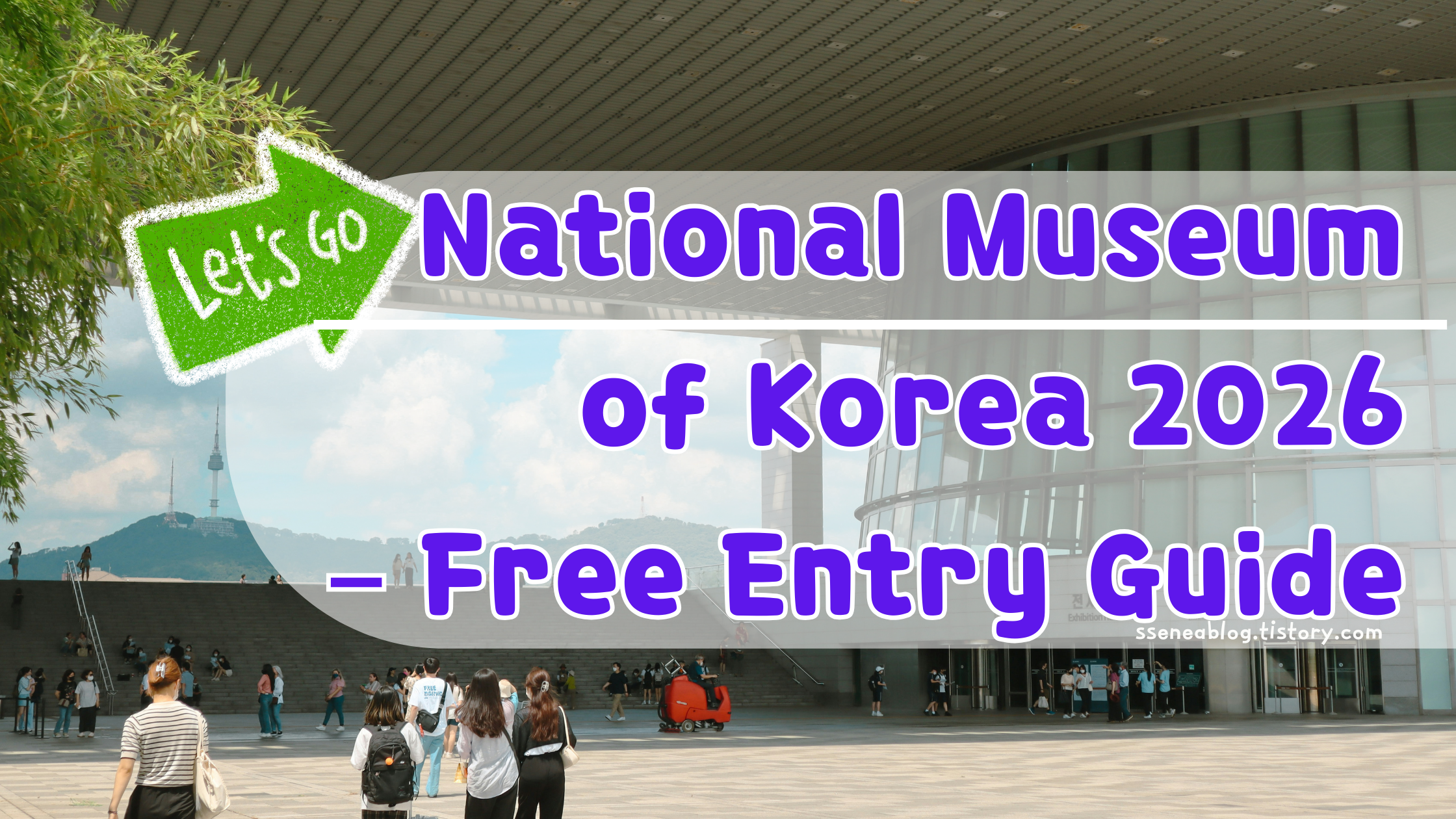
The National Museum of Korea is one of the largest museums in Asia. It holds over 310,000 artifacts across six permanent exhibition sections, has drawn nearly 4 million visitors a year, and charges nothing for admission to its permanent collection. It is also, by some margin, one of the most underused afternoons available to a visitor in Seoul — most people have it on their list, fewer actually go, and those who do often leave wishing they had more time.
This guide is structured around making the visit efficient: what to see, in what order, what to skip if time is limited, how the free English tours work, and a few things that are genuinely worth knowing before you arrive — including the fact that 2026 may be the last year the permanent collection is free, with discussions about introducing admission fees from 2027 ongoing.
Essential Information
Address: 137 Seobinggo-ro, Yongsan-gu, Seoul (국립중앙박물관)
Subway: Line 4 or Gyeongui-Jungang Line → Ichon Station (이촌역) Exit 2. A covered underground walkway connects directly to the museum — no outdoor walking required.
Website: museum.go.kr (English available)
Opening Hours
| Day | Hours | Last Admission |
| Mon / Tue / Thu / Fri / Sun | 09:30 AM – 05:30 PM | 05:00 PM |
| Wed / Sat (extended) | 09:30 AM – 09:00 PM | 08:30 PM |
| Outdoor Garden (Pagoda Garden) | 07:00 AM – 10:00 PM | — |
Wednesday and Saturday extended hours are genuinely useful. If you're visiting Seoul midweek, a Wednesday afternoon and evening gives you the full museum without the weekend crowds. The outdoor pagoda garden is accessible from 7 AM — arriving early for the garden before the museum opens is a pleasant way to start the day.
Admission — What's Free, What Isn't
Free: The entire Permanent Exhibition Hall — all six sections, the Children's Museum, and some free special exhibitions. No ticket, no booking, no registration. Walk in.
Paid: Temporary special exhibitions held in separate halls. These rotate throughout the year and cover international collections and curated thematic shows. Ticket prices vary; check museum.go.kr for the current schedule.
2026 note: There are active discussions about introducing an admission fee for the permanent exhibitions starting in 2027. If you're planning a Seoul trip this year, the permanent collection is still completely free — and 2026 may be the last year that's the case.
Getting Oriented — The Building Layout
The main building is larger than it looks from outside. Three floors of permanent exhibitions, plus a world culture section that runs across all levels. Getting lost is easy and not necessarily a problem, but a rough sense of the layout saves time.
Ground Floor (1F): Prehistory and Ancient History → Medieval and Early Modern History → the Gyeongcheonsa Ten-Story Stone Pagoda (the centrepiece of the central hall)
First Floor (2F): Calligraphy and Painting → Donated Collections → the Room of Quiet Contemplation (Pensive Bodhisattva — the museum's most famous space)
Second Floor (3F): Sculpture and Crafts → Asian Art galleries (China, Japan, Central Asia, Islamic Art, Southeast Asia)
The free English guided tour is the fastest way to navigate. If you're not joining a tour, pick up the English floor map at the main entrance — the exhibits are well-labelled in English, but the building's scale makes a map necessary.
What to See — 5 Essential Pieces
1. Gyeongcheonsa Ten-Story Stone Pagoda — the First Thing You See
Location: 1F Central Hall
National Treasure No. 86
You don't need to go looking for this one — it occupies the centre of the building's main hall and stands 13.5 metres tall, approximately the height of a five-story apartment building. Built in 1348 during the Goryeo Dynasty from white marble, the pagoda spent decades in Japan after being removed during the Japanese occupation before being returned to Korea and eventually installed here.
The base and lower three layers show Mongolian and Tibetan Buddhist influences; the upper seven layers revert to traditional Korean forms. Looking up at it from directly below is a different experience from the usual museum encounter with an artifact — the scale requires you to physically move around it.
The natural light from the glass ceiling changes how it looks at different times of day. Morning light and late afternoon are the best.
2. Pensive Bodhisattva (금동 미륵보살 반가사유상) — in the Room of Quiet Contemplation
Location: 2F Room of Quiet Contemplation (사유의 방)
National Treasure No. 78 and No. 83
Two gilt-bronze Bodhisattva statues from the Three Kingdoms period (roughly 6th–7th century), displayed together in a dedicated room designed entirely around the experience of seeing them. The room is dimly lit with ambient sound and no explanatory text — the museum's deliberate choice to encourage visitors to observe and think rather than read.
The statues show a figure seated with one leg crossed, chin resting on one hand — the classical pose of contemplation on birth, aging, sickness, and death. The craftsmanship is extraordinary for its period: the fingers, the expression, the fabric folds rendered in metal with a delicacy that reads as soft.
This is the most consistently mentioned room by visitors who've been to the museum. Allow time here rather than passing through.
3. Silla Gold Crown (신라 금관) — the Kingdom of Gold
Location: 1F Ancient History section
National Treasure No. 191
The Silla Kingdom (57 BC – 935 AD), based in what is now Gyeongju, produced some of the most technically accomplished goldwork in the ancient world. The gold crowns on display — adorned with comma-shaped jade beads (곡옥, gogok) and gold spangles that would have shimmered with any movement — are simultaneously delicate and imposing.
The crowns were burial items: placed in royal tombs rather than worn regularly, which is part of why they survive in the condition they do. Seeing them alongside the gold belts and accessories from the same tombs gives a sense of how completely material wealth defined royal identity in Silla.
4. Goryeo Celadon Openwork Incense Burner (청자 투각 향로) — Jade-Green Perfection
Location: 3F Sculpture and Crafts section
National Treasure No. 95
Goryeo celadon (고려청자) is the ceramic tradition Korea is most internationally associated with. The particular blue-green colour — called bisaek (비색) — was achieved through a glaze and firing process that took centuries to develop and was eventually lost. The Goryeo celadon in the museum's collection represents the technique at its absolute peak, in the 12th century.
The openwork incense burner is the standout piece: a lion figure on top, openwork patterns through which incense smoke would have filtered, the whole object about the size of a large grapefruit. The precision of the lattice work is remarkable even to a contemporary eye. The museum has the largest collection of Goryeo celadon in the world — the surrounding pieces are worth examining too.
5. White Porcelain Moon Jar (백자 달항아리) — Joseon Simplicity
Location: 3F Sculpture and Crafts section
The Moon Jar is a Joseon Dynasty (1392–1897) ceramic form — a large, almost spherical white porcelain jar made by joining two hemispherical pieces at the rim. The name comes from the full moon association of the round, luminous white form. The asymmetry is deliberate rather than accidental: the slight irregularities in shape are part of what makes each piece distinct.
Korean ceramics shifted dramatically from the jade-green extravagance of Goryeo to the pure white restraint of Joseon, reflecting the Confucian values of the new dynasty. The Moon Jars represent this aesthetic at its most complete — objects that are simultaneously simple and difficult to make, austere and warm.
The Free English Guided Tour — Take It
Times: 10:30 AM and 1:00 PM daily
Meeting point: In front of the Korean Empire section, Permanent Exhibition Hall 1F
Booking: Not required — just show up at the meeting point
The free English guided tour runs twice daily and covers the museum highlights in approximately one hour. No reservation, no sign-up — you arrive at the meeting point before the tour time and join. Groups of 15 or more adults do need to reserve by phone in advance, but individual visitors don't.
The tour covers the major pieces including the Pensive Bodhisattva and the Gyeongcheonsa Pagoda, and the guides are knowledgeable enough to answer questions beyond the standard script. Most visitors who take the tour report that it substantially improves the experience compared to navigating independently — the building's scale makes the highlights easy to miss without direction.
If you're not joining a tour, the audio guide (available in multiple languages at the information desk) covers 100 highlighted exhibits and costs around ₩3,000.
Practical Information
How Long to Visit
Minimum: 2 hours covers the five essential pieces above and the central hall comfortably.
Recommended: 3–4 hours for the permanent collection highlights, including the guided tour.
Full visit: A full day for someone interested in Korean history — the calligraphy and painting galleries, the donated collections, and the Asian art sections add significantly to the above.
Facilities
Luggage storage: Two locations — in front of the Museum Shop on 1F, and at the Children's Museum entrance (larger lockers for suitcases). Free of charge.
Coat storage: Free coat check on the west side of the main entrance.
Restaurants: Two options inside the building — a Korean and Western option with views of the reflecting pond, and an Italian restaurant with outdoor terrace seating on sunny days. Last order one hour before closing.
Children's Museum: Free, interactive, designed for ages 3–10. Extended hours during school holiday periods — check the museum website for summer and winter schedules.
Photography: Permitted throughout the permanent collection without flash. The Room of Quiet Contemplation has low light — phone cameras handle it well in portrait mode.
The MU:DS Museum Shop — Worth a Look
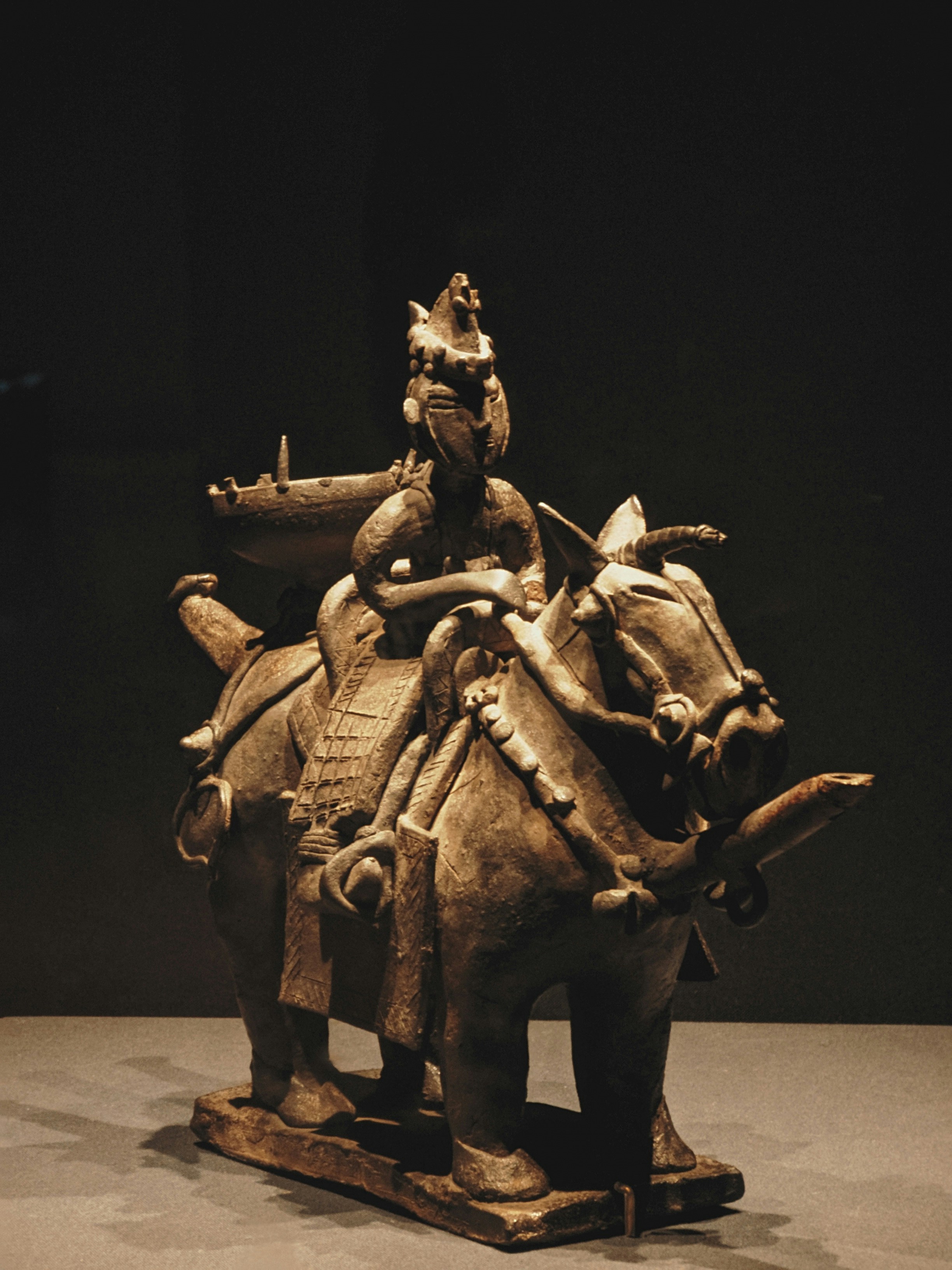
The museum's merchandise brand, MU:DS, has developed a genuinely considered range of products based on the collection. The Pensive Bodhisattva miniature has been one of the more widely shared souvenirs from Seoul in 2026 — a small-scale replica that captures the posture and weight of the original. Other items include celadon-inspired ceramics, traditional craft reproductions, and design objects based on collection motifs.
The shop is on the 1F level. It's worth more than a pass-through if you're looking for a souvenir that has a direct connection to what you've just seen.
Combining the Museum with Nearby Attractions
The museum's location in Yongsan offers good options for combining with nearby attractions:
Yongsan-gu War Memorial of Korea (전쟁기념관): 15 minutes by taxi or 20 minutes on foot. Korea's most visited military history museum, covering the Korean War and preceding conflicts. Also free admission for the permanent collection.
Itaewon: 10 minutes by taxi. The neighbourhood's international restaurants and cafes make a natural follow-up to a museum afternoon. Useful if you want food outside the museum's options.
Ichon Hangang Park: 5 minutes on foot from the museum. The riverside park has bike rental and walking paths along the Han River — useful for an outdoor break before or after the museum.
Why 2026 Is a Good Year to Go
The National Museum of Korea drew close to 4 million visitors in 2024, with international visitor numbers up significantly year-on-year as Korea's tourism profile has expanded. The permanent collection remains free, English infrastructure — signage, tours, audio guides — is better than it has ever been, and the museum is now genuinely comparable to major national museums in Europe in terms of presentation quality.
The ongoing discussions about introducing paid admission from 2027 onward add a practical reason to visit this year specifically. The permanent collection is an extraordinary thing to have access to for nothing. It would be a shame to find out too late that the window had closed.
Looking for more Seoul museum options?
The Leeum Samsung Museum of Art in Hannam-dong and the National Museum of Modern and Contemporary Art in Gyeongbokgung are both worth a visit for different perspectives on Korean art.
📖 Want the complete first-timer's guide? → National Museum of Korea 2026 – Complete Visitor Guide for First-Timers
🇰🇷 Read more Korea travel guides in Korean on Ssenea, My Diary
'어디 가볼까' 카테고리의 다른 글
| 남해 여행 가이드 2026 – 독일마을·다랭이마을·보리암 코스 완벽 총정리 (0) | 2026.08.26 |
|---|---|
| Nami Island Day Trip from Seoul 2026 – Complete Guide with Chuncheon, Rail Bike, and Dakgalbi (0) | 2026.08.26 |
| 부산 여행 가이드 2026 – 볼거리·먹거리·숙소까지 첫 방문자를 위한 완벽 총정리 (0) | 2026.08.25 |
| Korea Travel Tips for First-Timers 2026 – Everything You Need to Know Before You Go (0) | 2026.08.25 |
| 한국 여행 처음이라면 꼭 읽어야 할 것들 2026 – 입국부터 교통·에티켓·예산까지 완벽 가이드 (0) | 2026.08.25 |